Deqing Fu

This is Deqing Fu and I’m a final-year PhD candidate in Computer Science at the University of Southern California (USC). My main research interests are theoretical foundations of large language models and multimodal LLMs. I’m (co-)advised by Prof. Vatsal Sharan of USC Theory Group and Prof. Robin Jia of Allegro Lab within USC NLP Group, and I’m working closely with Prof. Mahdi Soltanolkotabi. During my Ph.D. studies, I spent time at Google and Meta as a student researcher. Before USC, I completed my undergraduate degree in Mathematics (with honors) and my master’s in Statistics at the University of Chicago.
Research Highlights
Algorithmic Perspectives on Large Language Models
- Can Transformers learn algorithms simply from data? (NeurIPS 2024, ICML 2026)
- Arithmetic in pretrained LLMs: memorization vs. mechanisms? (NeurIPS 2024, ICLR 2026, COLM 2026)
- What distinguishes Transformers from other architectures? (ICLR 2025)
Interpretability and Alignment
- Decision theory for LLM reasoning under uncertainty (ICLR 2025 Spotlight, EMNLP 2026)
- Steering vectors for improved visual understanding (ACL 2026), and for efficient and privacy-preserving synthetic data generation (ICML 2026)
- Mechanistic interpretability via SAEs and transcoders (COLM 2026, Tech Report)
Multimodal Models and Applications
- Multimodal rewards for improving generation quality: token-level hallucination reduction (ICLR 2025) and text-to-image alignment (NAACL 2025)
- Modality sensitivity in Multimodal LLMs (COLM 2024)
- Large-scale dataset for visual reasoning with images (ICLR 2026)
News
All news →| Sep 30, 2026 | The TabFM technical report is now on arXiv, along with our new preprint TabFM-Auto: Self-Evolving Pipelines for Tabular Foundation Models, which pairs a coding agent with a frozen TabFM and ranks #1 on TabArena! |
|---|---|
| Sep 24, 2026 | Our paper VASE: Value-Aware Stochastic KV Cache Eviction for Reasoning Models is accepted to NeurIPS 2026! |
| Aug 29, 2026 | Our paper Are LLM Decisions Faithful to Verbal Confidence? was accepted to EMNLP 2026 Main Conference! |
| Jul 21, 2026 | New paper TOPL: Token-Level Off-Policy Learning for Faithful Generation Under Distribution Shift, accepted to COLM 2026! |
| Jul 08, 2026 | Convergent Evolution and Resa are accepted to COLM 2026! |
Selected Publications
2026


2025
- ICLR
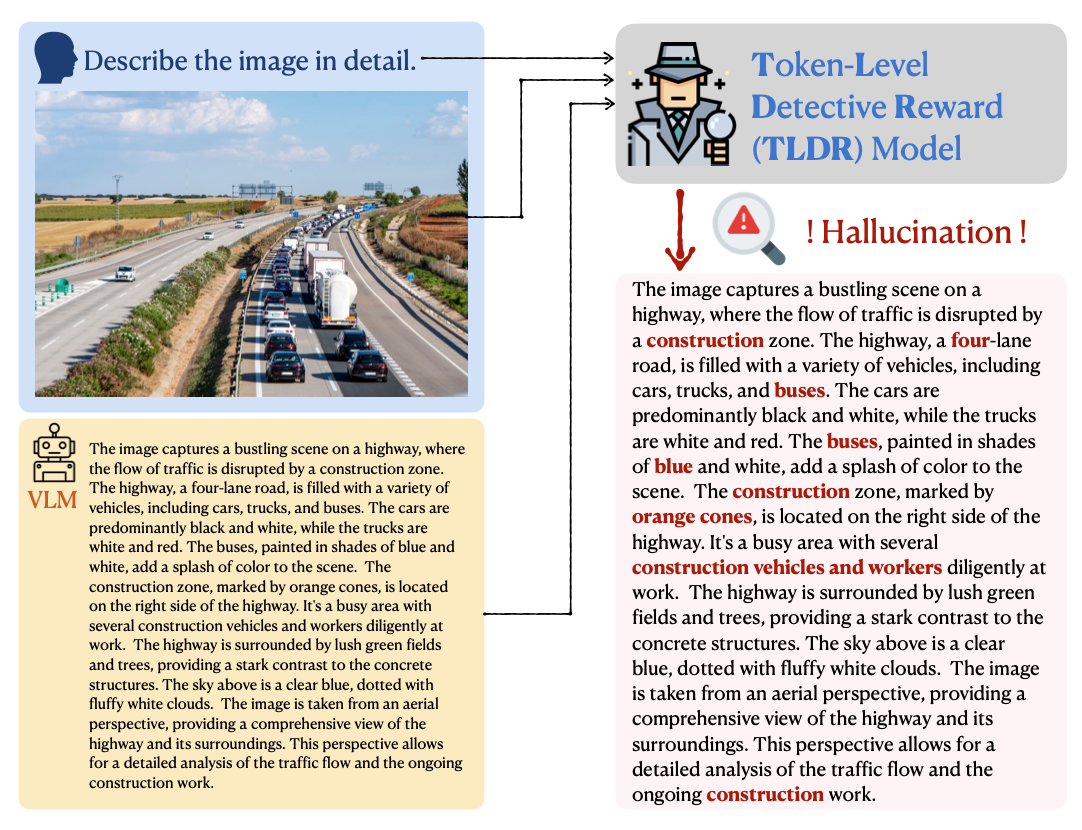 TLDR: Token-Level Detective Reward Model for Large Vision Language ModelsICLRIn International Conference on Learning Representations (ICLR), 2025
 - ICLR
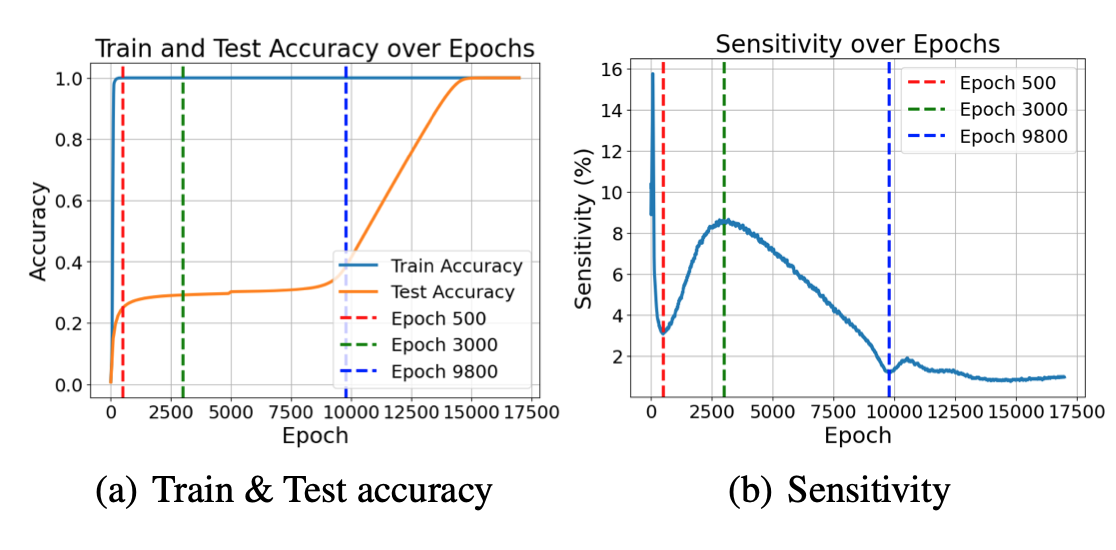 Transformers Learn Low Sensitivity Functions: Investigations and ImplicationsICLRIn International Conference on Learning Representations (ICLR), 2025
 - NAACL
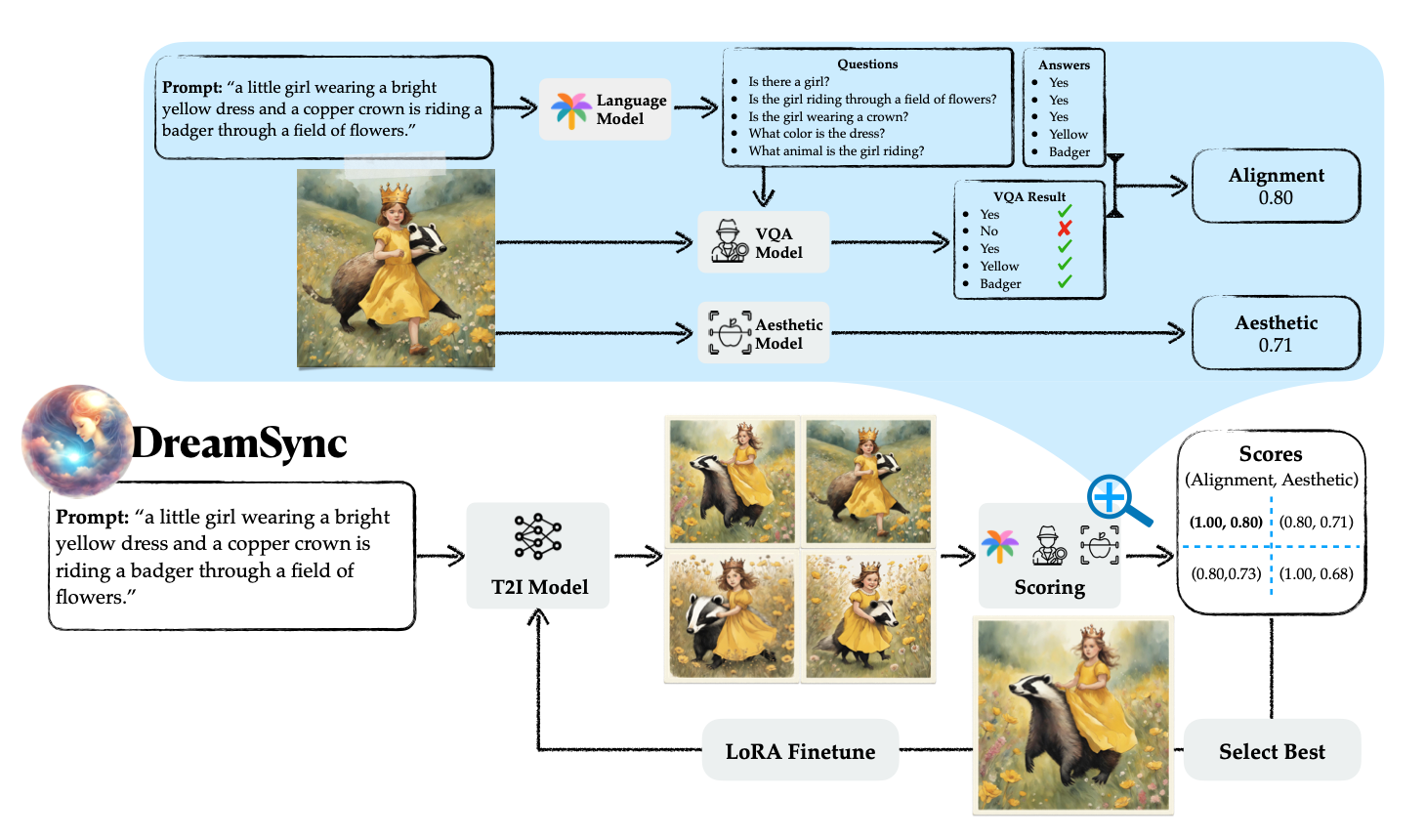 DreamSync: Aligning Text-to-Image Generation with Image Understanding FeedbackNAACLIn Annual Conference of the North American Chapter of the Association for Computational Linguistics (NAACL), 2025


2024
- NeurIPS
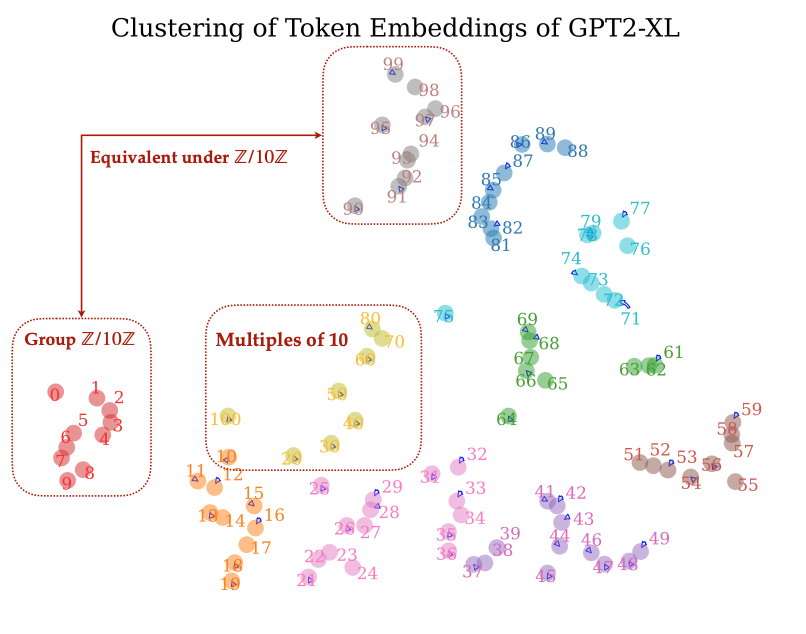 Pre-trained Large Language Models Use Fourier Features to Compute AdditionNeurIPSIn Conference on Neural Information Processing Systems (NeurIPS), 2024


* Equal contribution.